
A first customer conversation does not need a dramatic sales pitch. It needs a clear problem, a small working example and enough honesty for the other person to decide whether the tool is worth exploring.
If you are learning to build AI products, start by understanding a workflow rather than asking strangers to admire your software. A useful conversation may lead to a trial, a change in direction or a decision to stop. Each can save you from building features around assumptions nobody has tested.
Use this guide after investigating the problem and building a bounded prototype. It focuses on an honest demonstration and trial agreement, rather than proving a market from scratch. The example is fictional. It illustrates a process, not a customer success story or a promise that following these steps will produce a sale.
Choose someone who actually encounters the problem
Sana is learning to build a tool for a small equipment-rental business. The prototype turns an operator’s rough equipment-condition notes into a structured draft checklist. It does not judge safety, approve equipment for use or send the checklist to customers.
She initially thinks her audience is “every small business.” She narrows it to rental operators who repeatedly rewrite condition notes before a supervisor reviews them. This helps her ask specific questions and recognise where the prototype might fit.
The first person to speak with could be a business owner she already knows or someone introduced with permission. She should explain the purpose of the conversation and make declining easy. Repeated unsolicited messages and exaggerated claims are poor substitutes for a relevant introduction.
Before arranging anything, Sana writes what she wants to learn: whether rewriting condition notes is a recurring problem, how mistakes are corrected and who decides whether a new tool can be tried. She does not assume that the person who uses the tool is also the person who can authorise its purchase.
Ask about recent work before showing your solution
“Would you use an AI assistant?” is difficult to answer meaningfully. A more useful question is, “Can you describe the last time you prepared a condition checklist?” It invites the person to explain an actual sequence rather than predict their future enthusiasm.
Sana can ask what information arrives, where it is copied, who reviews it and what happens when a note is unclear. She can also ask what works well in the current method. A paper checklist may have advantages her prototype lacks, such as being usable during a network failure.
She should not request private customer records to make the conversation convincing. The operator can describe the process without sharing names or confidential files. Sana can build invented examples from the general structure with permission to discuss the workflow.
Separate statements from interpretations in your notes. “The operator rewrites notes at closing time” is something they said. “They will pay for automation” is your inference, which still needs evidence. Keeping those separate prevents friendly conversation from becoming an invented market result.
Write a small demonstration agreement
Before the demo, state what will happen in plain language. Sana’s example is: “We will try three invented equipment notes. The tool prepares a draft for review. It cannot decide whether an item is safe, and nothing will be sent or saved to your business systems.”
This agreement can be short, but it needs to match the actual setup. If the prototype saves inputs or sends them to a model provider, explain that route accurately. Do not promise “nothing is stored” unless you have checked every relevant part of the system.
Decide the demonstration’s limits in advance: no real records, no connected business account, no payments and no automatic actions. These limits make early learning easier. A request to connect a real system is a separate decision requiring appropriate permissions and preparation.
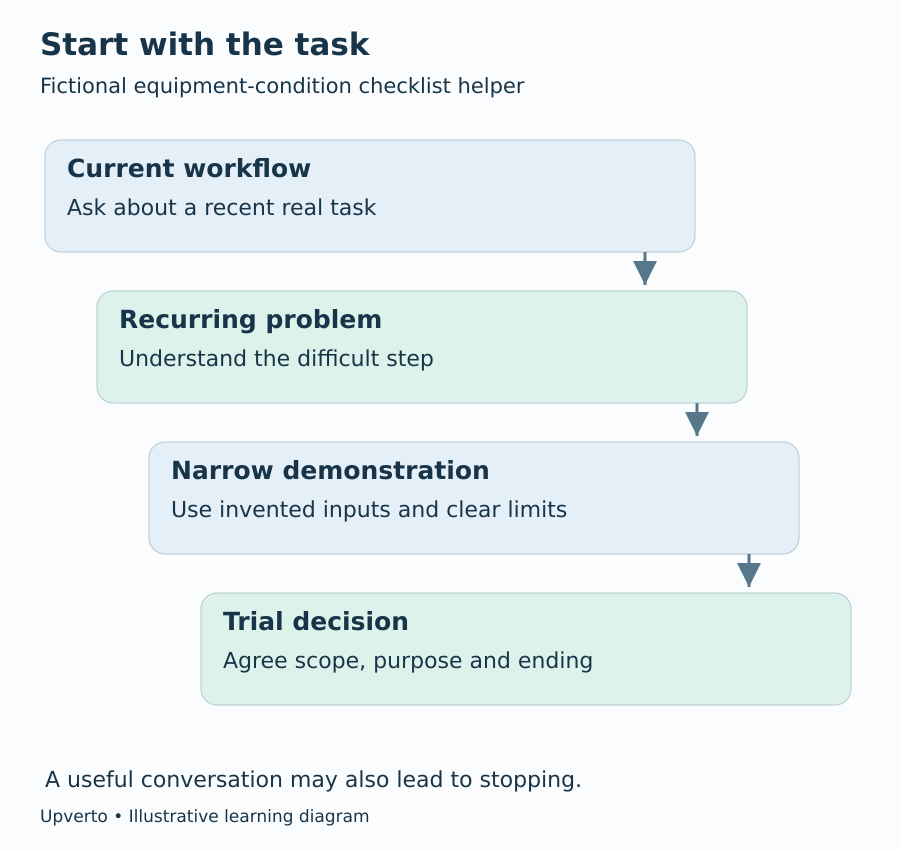
Figure 1. Understand the current task before asking someone to consider a trial.
Show ordinary work and one awkward case
Sana prepares three invented notes. The first clearly names an item and its condition. The second leaves out the equipment identifier. The third contains conflicting statements: “handle secure” and “handle loose.”
The demo should reveal how the tool handles these differences. A useful response to the conflicting note is to highlight the inconsistency for a person to resolve. Quietly choosing one description could conceal an important problem.
Sana begins with the ordinary case, then asks the operator to try the missing-information case. She watches without explaining every button. Finally, she shows the conflicting note and discusses what the tool should do. She states which checks have been run and which have not.
If the demonstration uses a prepared output because live generation is unavailable, label it as a prepared example. If a person corrected the text beforehand, say so. A mock-up can be useful for discussing a workflow, but it must not be presented as functioning software.
Observe the task without rescuing every mistake
Ask the participant to explain what they expect before clicking. Notice whether labels make sense, whether they can find the source note and whether they recognise that the result is a draft. When they become confused, record the point of confusion before helping.
A demonstration becomes less informative if the builder continuously guides the user through hidden problems. You want to know whether someone can understand the workflow without your memory of how it was built.
Ask specific questions afterwards: “Which part would you check before using this?” “What would stop you trying it again?” “Where would this fit in your current process?” Avoid treating compliments as commitments. “Interesting idea” tells you much less than a participant explaining a real next task they would want to test.
Record observations without inventing precision. One person completing one invented checklist is a small observation. It is not evidence of a general time-saving percentage or a reliable forecast of adoption.
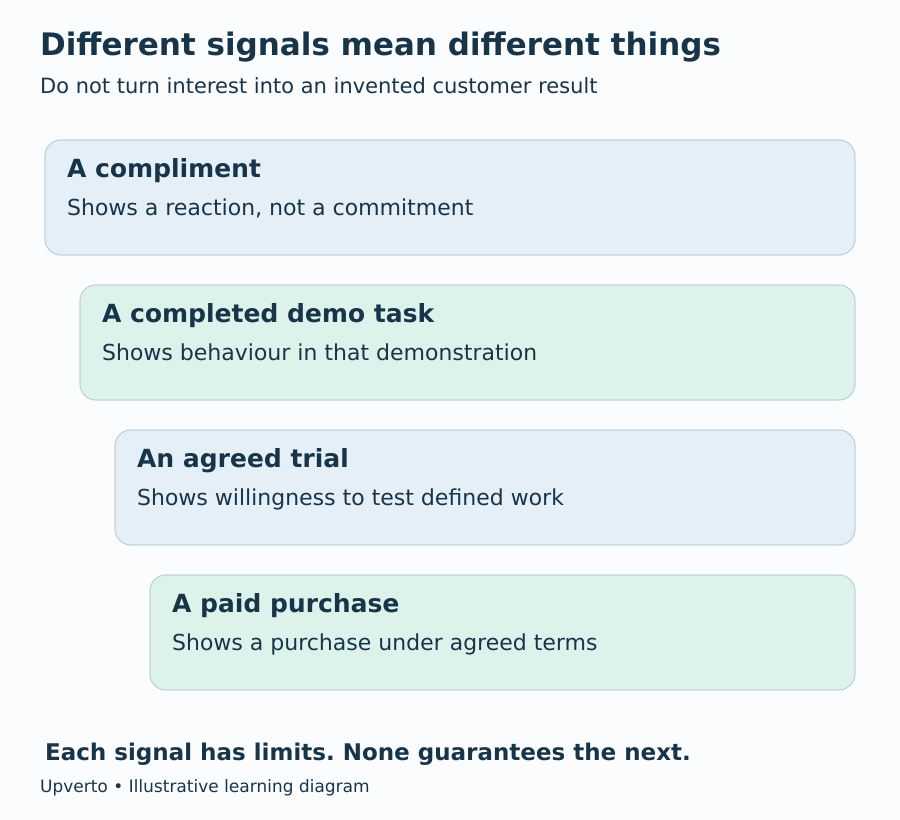
Figure 2. These signals answer different questions; none guarantees the next one.
Offer a bounded trial only when you can support it
If there is genuine interest, propose a trial with a clear purpose, scope and ending. For Sana, a safe next step might still use invented records while the operator checks whether the draft structure matches their workflow. A trial does not need to begin with sensitive data or payment.
Write down who will participate, what the tool does, what it excludes, how feedback will be collected and what would cause the trial to stop. If real operational data is later proposed, review access, storage, consent and appropriate obligations before using it. A friendly introduction does not settle those questions.
If the trial is paid, make the price, included work, limitations, support expectations and cancellation arrangements clear before agreement. Do not accept a broad promise to “automate the business” when you have demonstrated only a checklist draft. Commercial arrangements may require professional advice suited to the location and business.
Your role is to offer a testable proposition, not to pressure someone into validating your learning project. A person can find the concept useful and still decide that the cost, change in habits or review burden makes it unsuitable.
Turn the conversation into a decision
Afterwards, review the evidence while it is fresh. Sana might discover that operators can already write condition notes quickly, but supervisors struggle to locate missing identifiers. That would suggest a different feature: flag incomplete records rather than rewrite every sentence.
She should test that interpretation before rebuilding. A short follow-up question can confirm whether she understood the problem. Avoid adding every feature mentioned during one conversation. Requests are clues about needs; they are not automatically the best design.
This is where practical self-learning becomes valuable. Upverto’s approach connects explanation, exercises, projects and independent changes. A user observation gives you a reason to revisit a concept, practise the missing skill and test a changed prototype. You are learning to make decisions about a product, not merely collecting a portfolio of copied demonstrations.
Your preparation checklist and next step
Before your first conversation, write the intended user, one recurring task, the current alternative, the question you want answered and the authority needed for any proposed trial. Prepare invented inputs, clear limitations and a way to record observations with the participant’s knowledge.
Before your demonstration, check that no private data, credentials or unrelated browser tabs are visible. Confirm that draft outputs cannot trigger real actions. Practise an ordinary case, a missing-information case and a failure message so you can explain them calmly.
Your next step is one respectful problem conversation, not a mass sales campaign. Aim to leave with a better description of the task and a specific decision about what to test next. Your eventual outcome might be an internal tool, a small product business or a decision that the existing method is good enough.
Frequently asked questions
Do I need a complete product before speaking to someone?
No. You can discuss a workflow before building anything. Clearly label sketches, mock-ups and working prototypes so the other person understands what exists and what is only proposed.
Should I offer the first trial for free?
That depends on the arrangement and your capacity. Free does not remove privacy or support responsibilities. Define scope and ending either way, and avoid promising indefinite work you cannot sustain.
What if someone asks whether AI is always accurate?
Explain the actual limits and required review. Show a relevant failure case rather than making a universal claim. Say what you have tested and what remains uncertain.
Can one positive meeting prove demand?
No. It supplies information about that person’s situation. Stronger evidence may include repeated use or a clear purchase decision, but each observation still has limits.
Should I demonstrate every feature I have built?
Usually a narrow task is easier to evaluate. Show the features needed for that task and its important limitations. A long tour can hide whether the core workflow helps at all.
What if the person says their current method is better?
Ask what makes it better and record the reason. You may improve the idea or stop pursuing it. Avoid arguing someone into a problem they do not have.