
After someone tries your prototype, you may receive several kinds of feedback at once. One person wants a new feature. Another cannot find a button. A third says an answer is wrong but cannot explain why. The useful next step is to sort these observations before changing the product.
For a beginner, improvement should be a sequence you can follow: record the problem, understand its effect, reproduce it, make a focused change and check both the new and old behaviour. This keeps learning connected to evidence instead of a growing list of requests.
The fictional example in this guide concerns a community-event notice helper. It is a learning scenario, not a report of a real deployment, student result or commercial success.
Start with a record of what actually happened
Omar’s prototype turns an organiser’s approved event details into a short notice draft. It does not invent venues, publish announcements or contact participants. A person checks the draft against the source before using it.
During a safe trial with invented events, a participant says, “It keeps getting dates wrong.” Omar could immediately rewrite the prompt, but first he asks which input produced the problem and what the expected notice should have said.
The example contains “04/05” without a year. The participant intended 4 May, while the draft treated it as 5 April. The feedback has uncovered an unclear input convention as well as a model response problem. A longer prompt alone may leave the same confusion in place.
Omar records the original input, output, intended meaning and software version. He removes unnecessary personal information from the feedback record. When someone reports a problem involving real data, do not encourage them to paste private records into an unrestricted support channel.
Separate observations, explanations and requests
A useful feedback record has three distinct parts. The observation describes what happened: “The draft used 5 April.” The explanation is a possible cause: “The date format was ambiguous.” The request is a suggested solution: “Add a calendar picker.”
These are related, but they are not interchangeable. The calendar picker might be helpful, yet the underlying need is an unambiguous event date. A simpler form with a written month and required year might also solve the problem.
Ask a clarifying question when the evidence is incomplete. “Can you show an invented example with the same structure?” is often more helpful than “What features do you want?” Reproducing the problem gives you something concrete to check after a change.
Do not overwrite the original report with your later interpretation. Keep the evidence and add your conclusion beside it. If the repair fails, you can revisit the earlier assumptions rather than relying on memory.
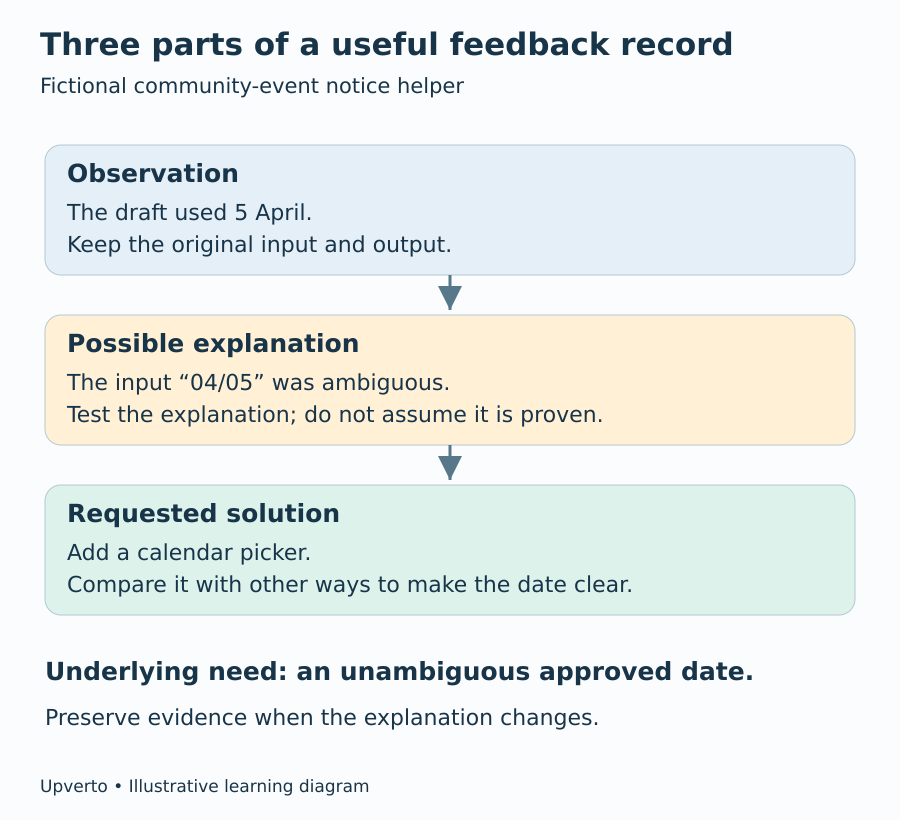
Figure 1. Preserve the observation even when your explanation changes.
Decide what needs attention first
Sort issues by their effect on the task. A notice that states the wrong date deserves attention before a request for extra font choices. A problem that exposes private information or triggers an unintended action requires stronger containment than a cosmetic inconvenience.
Omar uses four practical questions: What could go wrong for the user? How often has it been observed? Can the user recognise and recover from it? Does it block the product’s central task? He records uncertainty instead of pretending to know the frequency from one report.
He also considers scope. A participant requests automatic social-media publishing. That introduces permissions, external actions and new failure modes beyond the draft-only prototype. Omar can record the request without accepting it. Improving a small product does not require expanding its authority every time someone asks.
Choose a small set of changes for the next version. If everything is urgent, explain which issue prevents useful testing and address that first. Keep a separate list of ideas so that an interesting feature does not displace a necessary repair.
Form a hypothesis you can test
A hypothesis is a proposed explanation or change with an expected result. Omar writes: “If the input requires a written month and year, and the draft copies the approved date exactly, ambiguous-date mistakes should decrease on our test cases.”
He identifies what would challenge that idea. If a clear “4 May 2027” input still becomes “5 April 2027,” the issue is not only the form. If the correct date appears in the draft but is hard to see during review, presentation also needs attention.
This step prevents random editing. You should be able to say why a change might help and what observation would show that it did not. Keep the expected result specific enough to inspect without asking the same model to declare its own work correct.
For fields such as dates and venue names, compare the output directly with the approved source. Human judgement can assess clarity, but a pleasant writing style must not compensate for a changed factual detail.
Make the smallest change that addresses the cause
Omar changes the input form to require a day, written month and four-digit year. He adds a visible source-date line beside the draft for review. The tool flags missing dates rather than supplying one.
He does not simultaneously change the model, rewrite every instruction and redesign the whole page. Making many changes at once would make it harder to identify what helped or caused a new problem.
For a learning prototype, keep a copy of the previous working version before editing. Record what changed and why. If the project is shared, agree on how versions are identified so that feedback can be connected to the right build.
A small change may require new learning. Return to the relevant concept, practise it separately and then apply it to the project. This fits Upverto’s self-learning pattern of explanation, exercise, project work, checking and independent revision. The point is to understand the repair well enough to maintain it later.
Rerun old checks as well as the new case
A regression is a previously working behaviour that breaks after a change. Omar’s date repair should not stop notices without optional venue directions from being created. He reruns ordinary cases, missing-information cases and the original date failure.
Keep a stable test set for comparing versions, plus a few fresh examples to check unfamiliar patterns. Record outputs and important settings. If the model or configuration changes, treat that as a meaningful change requiring review rather than assuming the old results still apply.
Avoid summarising a tiny test with a broad claim such as “now fully accurate.” Instead say, “The revised version preserved the approved date in these twelve test cases; further trial review is still needed.” That statement tells the reader exactly what evidence exists.
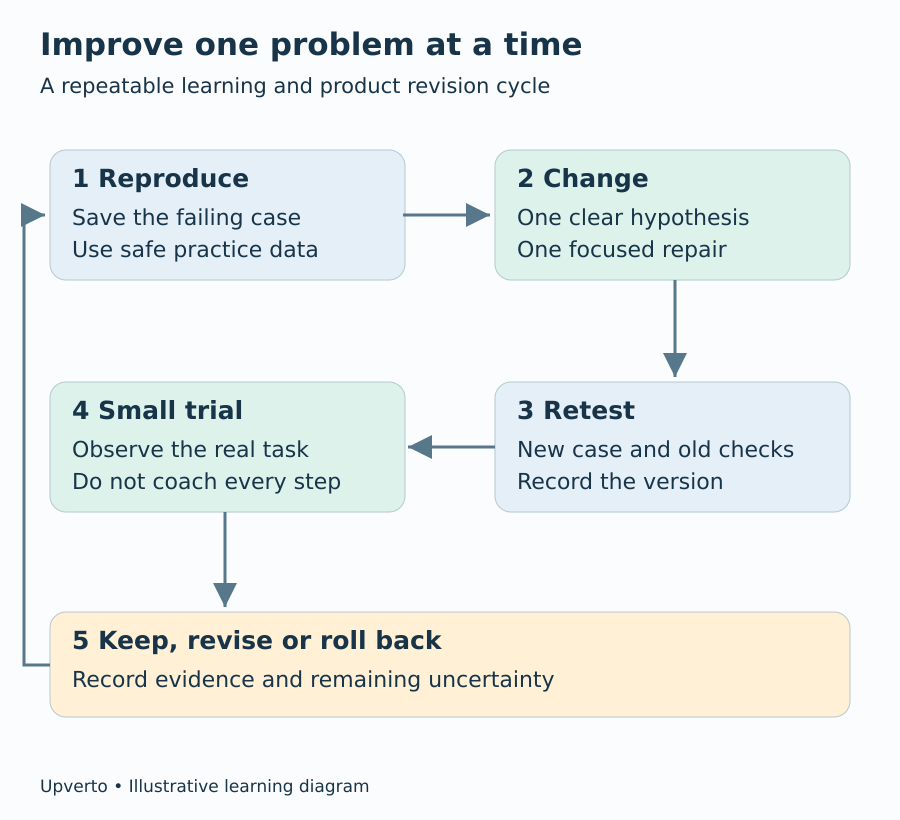
Figure 2. A change earns its place by passing checks and helping the intended task.
Check usefulness in a limited follow-up trial
Technical checks answer whether the revision behaved as expected under test. A follow-up trial asks whether a person can use it more reliably. Omar asks the participant to prepare another invented notice and review its date without coaching.
He watches for a new problem: perhaps the required fields are clear, but users still overlook the source comparison. That would be evidence for another focused improvement, not proof that the entire design has failed.
Define success before collecting feedback. In this example, success means the participant enters an unambiguous date, the draft preserves it and the participant can verify it against the source. It does not mean they say the interface looks better.
Keep the trial bounded. Do not replace a working operational process merely to obtain more feedback. Where mistakes could have serious consequences, retain suitable human checks and seek experienced review before widening use.
Close the feedback loop clearly
Tell the participant what changed, what remains limited and what you want checked next. A useful update might say: “The date now uses a written month and required year. Please check whether entering and reviewing it is clear. The tool still only prepares drafts.”
Do not promise every requested feature. If an idea is deferred, explain the relevant scope decision. Users can understand “automatic publishing is outside this draft-only trial” more easily than a vague promise that it is coming soon.
Maintain a short change record: issue, evidence, decision, version, checks and remaining questions. This helps distinguish completed work from plans you have not implemented.
Your improvement worksheet and next step
Choose one feedback item and fill in these fields: observed problem; intended task; consequence; reproduction input; likely cause; smallest proposed change; expected result; old checks to rerun; follow-up observation; and decision to keep, revise or roll back.
Your next step is to reproduce one problem with safe data before adding another feature. If it cannot be reproduced, record what is missing and ask a focused question. If it can, use the smallest useful repair and verify the result.
This habit can support an internal tool, a community project or a product business of your own. Sustainable improvement comes from understanding what changed and whether it helped, rather than continually adding features that nobody has tested.
Frequently asked questions
Should I build every feature a user requests?
No. Understand the need behind the request and compare it with the product’s purpose. Record ideas separately from committed work, especially when they require new permissions or consequential actions.
What if two users ask for opposite changes?
Look at their tasks and contexts. They may need different workflows, or one may be outside your intended audience. Do not assume that adding a setting is always simpler than choosing a clear scope.
How much feedback is enough before changing something?
It depends on the consequence and evidence. One reproducible serious failure can justify immediate containment. A minor preference may need more observations before it becomes a priority.
Can I ask AI to decide which feedback matters?
It can help organise non-sensitive notes, but you should review the evidence and decision. Do not let a generated summary erase uncertainty, invent frequency or replace the original observations.
What should I do when a repair makes another feature worse?
Use the previous working version when appropriate, record the regression and investigate. A rollback is a practical recovery step, not evidence that the learning effort was wasted.
When is an improvement finished?
When the intended change is implemented, relevant checks pass and the available user observation supports keeping it within the stated scope. Record remaining uncertainty; completion of one repair is not completion of all product testing.