A testimonial should reflect an actual person’s experience, and a referral should be an introduction they freely choose to make. Ask for accurate feedback, obtain permission for the intended use and keep unsupported outcomes out of the wording. These habits support grow a sustainable freelance business without turning a relationship into a source of invented endorsements.
Ask after the relevant experience exists
Complete a usable freelance project handover and address material delivery issues before asking someone to describe the work. A receipt acknowledgement is not a testimonial, and a complimentary message about your attitude is not evidence that the project achieved a commercial result.
Invite feedback on the part the person actually experienced: clarity of communication, usefulness of the delivered files, the handover process or how you handled a particular requirement. A client can describe their own experience without estimating a revenue effect they did not measure. A practice-project reviewer can comment on the review they performed, but should not be presented as a paying client.
Make the request optional and easy to decline. Do not link support, delivery access or future cooperation to a positive statement. If there is criticism, use it to understand the problem; do not ask the person to hide it so that you can produce a stronger marketing quote.
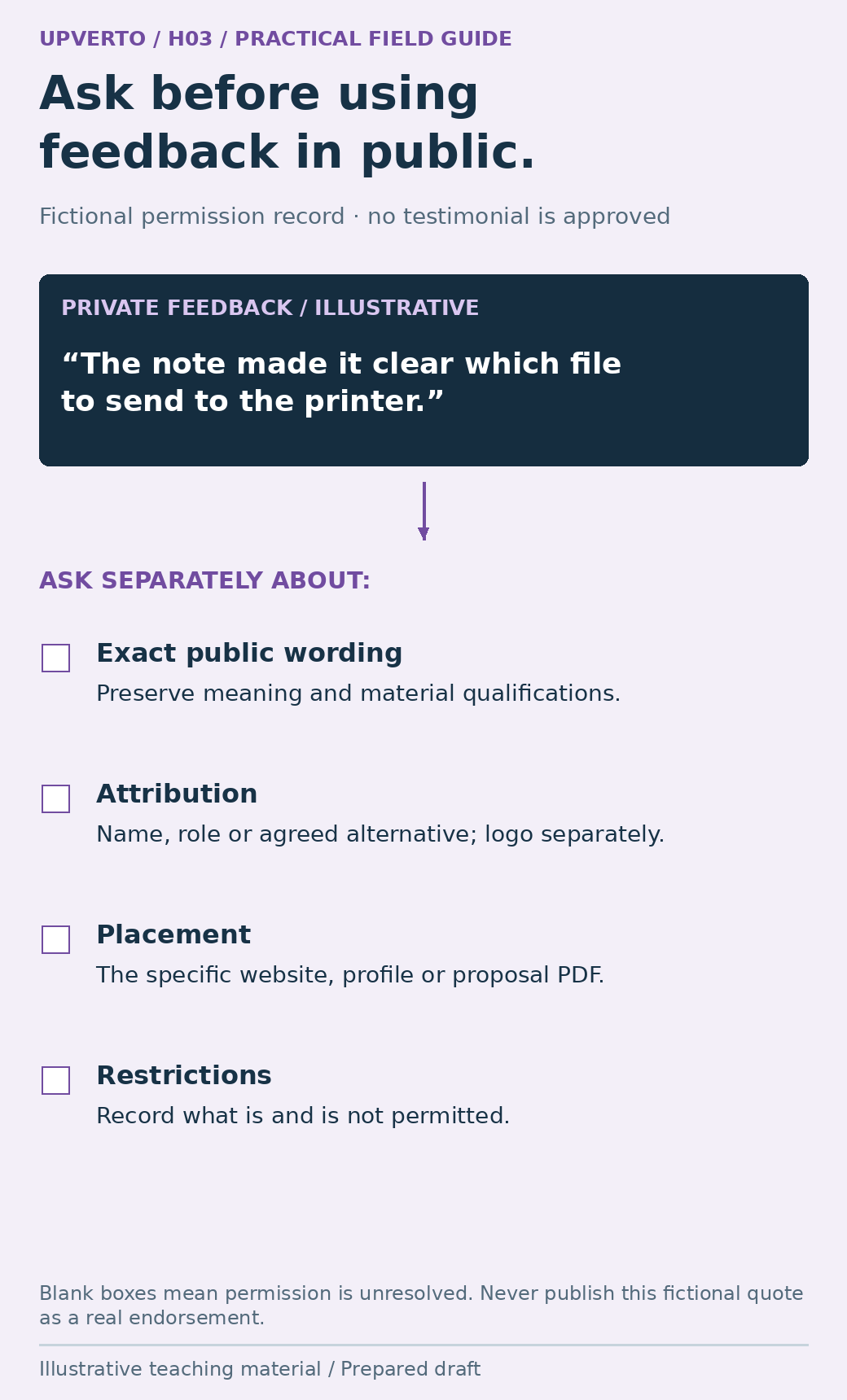
Read the text version: Record exact testimonial publication permission
The feedback shown is fictional and must never be published as a real endorsement. Receiving private feedback does not establish publication permission. Ask separately about exact wording, attribution, specific placement and restrictions. The boxes remain blank because permission is unresolved. A logo or confidential detail may require separate approval.
Keep accuracy, permission and disclosure separate
For the United States, the FTC’s Consumer Reviews and Testimonials Rule guidance explains restrictions on fake or misleading reviews and testimonials, including incentives conditioned on a particular review sentiment. Its guidance on soliciting reviews also discusses disclosure of incentives. These are US sources, not a complete statement of every jurisdiction’s advertising law.
Check the requirements that apply to the intended publication and platform. Some platforms impose their own restrictions on incentives or soliciting reviews. The examples in this guide use no incentive. A genuine statement can still be misleading if you remove a material qualification, attach it to a different service or present an exceptional outcome as something everyone should expect.
Ask permission for the actual wording, attribution and placement. Permission to receive private feedback is not permission to publish a name, logo or confidential project detail. Keep the original statement and the approved public version so the relationship between them remains clear.
Worked example: a permission-aware request
Fictional draft; not sent: A designer has handed over the agreed event files. The following request invites feedback without supplying an invented testimonial for the client to endorse.
Thank you for reviewing the event-design pack. If you are comfortable sharing feedback, what was useful about the files or handover, and what could I improve?
If you would like me to use any of your feedback publicly, I will send the exact proposed wording and ask separately about the name or role to display and the places it may appear. There is no obligation, and your answer will not affect the support already agreed.
The request separates feedback from publication permission. It invites criticism and does not ask for a five-star rating or a revenue claim. In a real request, refer only to work the person actually received and avoid suggesting an outcome they have not independently described.
If you need to shorten a response, preserve its meaning and material qualifications. Send the proposed edit for confirmation. Correcting a typo is different from changing “the file names were clear” into “this service transformed our business.” Do not use AI to manufacture a more impressive voice or result.
Inspect the claim before publishing it
| Fictional source statement | Proposed use | Decision |
|---|---|---|
| “The note made it clear which file to send to the printer.” | A quote about the handover, with approved attribution | Potentially appropriate after exact permission |
| “The design looked organised, but we have not used it yet.” | Remove the qualification and claim a successful campaign | Misleading; retain the actual limit |
| No attendance data supplied | “The design doubled attendance.” | Unsupported; do not publish |
These statements are fictional editorial examples and must never be used as real endorsements. In your own record, keep the actual source, project, date, approved wording, attribution and permitted placement. If the approval is limited to a proposal PDF, do not silently add the quote to a public website.
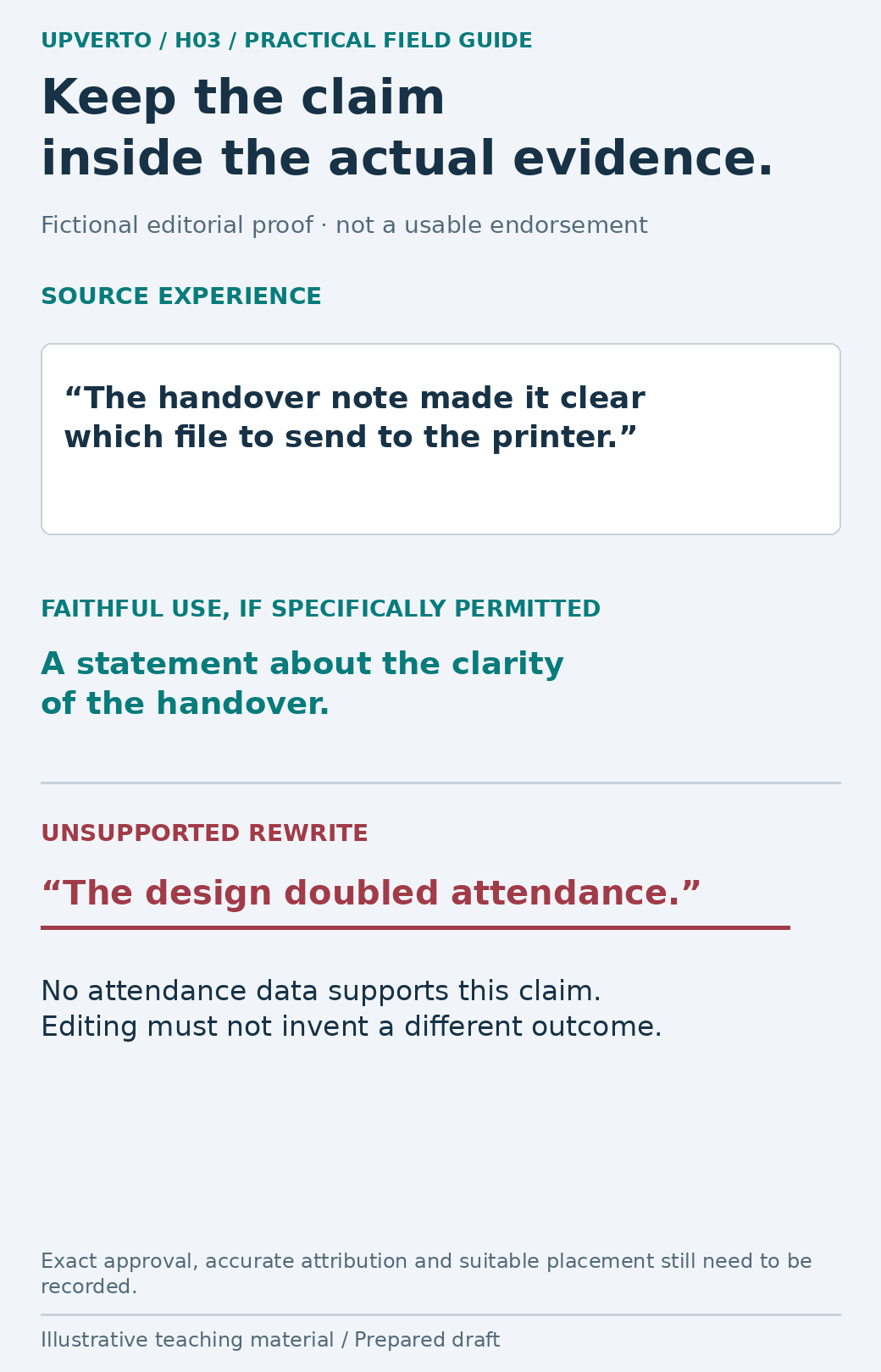
Read the text version: Reject a testimonial rewrite that invents a result
The fictional source statement concerns clarity about which file to print. If specifically permitted, its public use should preserve that meaning. Rewriting it as a claim that a design doubled attendance invents an unsupported result. Exact publication permission, attribution and placement still need to be recorded. These sample statements are not real testimonials.
Ask for an introduction, not someone else’s private list
A referral request should explain the kind of work you are seeking and let the person decide whether they know someone appropriate. Give them a short description they can forward. Avoid requesting access to their customer database, collecting private contact details without an appropriate basis or implying that an introduction guarantees a sale.
Fictional referral draft: “If you know an organiser who needs a defined event-design pack from approved copy, you are welcome to forward my project page. Please ask them whether they would like an introduction before sharing their contact details. There is no need to recommend a result you have not observed.”
When a conversation begins through that introduction, keep the relationship accurate. The guide to find freelance work through LinkedIn network explains useful professional conversations without invented familiarity. An introduction is a starting point for relevance and discovery, not proof that the project is already suitable.
Copy this testimonial and referral permission record
| Field | What to retain |
|---|---|
| Source and experience | Who gave the feedback and what work they actually experienced |
| Original wording | The unedited statement and its context |
| Proposed public wording | Any shortening or edit, with material limits preserved |
| Attribution | Name, role, organisation or agreed alternative; logo permission separately |
| Placement | The actual website, profile, PDF or other intended use |
| Permission record | What was approved and when; any restrictions or later change request |
| Claim check | Which outcomes are supported and which must not be implied |
| Referral action | What may be forwarded and whether an introduction is welcomed |
Use show portfolio work honestly when preparing a case study around the same work. The case study, testimonial and project evidence should agree about your contribution and the limits. A positive quotation cannot repair a misleading description elsewhere on the page.
Review older endorsements when the service changes. A statement about a small design handover should not be repurposed as proof of a different specialist service. Handle requests to change or remove attribution through the applicable agreement, platform rules and privacy requirements. Keeping the record clear makes that conversation easier.
Frequently asked questions
Can I write a testimonial for the client to approve?
You can propose a faithful shortening of feedback they actually gave, then ask them to confirm the exact wording. Do not invent praise or an outcome and ask someone to legitimise it merely by agreeing.
May I publish a compliment from a private message?
Ask for permission for the wording, attribution and intended placement. A private message is not automatically approval to publish a name, logo or project detail.
Can I offer a discount for a positive review?
Do not condition an incentive on positive sentiment. Requirements vary by jurisdiction and platform, and disclosure can also be required. The examples here use no incentives; consult current applicable rules before any alternative arrangement.
Can feedback on a practice project become a client testimonial?
No. Describe the relationship accurately, such as a practice-project review, and obtain permission. Do not imply the reviewer purchased a service or experienced a result they did not observe.
What if a client gives useful criticism instead of praise?
Thank them, investigate the issue and use it to improve the work or process. Feedback does not need to become marketing material. Do not pressure the person to replace an accurate account with a positive one.
How should I ask for a referral?
Describe a specific suitable task and offer a short page or note the person can forward. Let the prospective contact choose whether to engage, and do not request a private contact list or imply guaranteed results.
Sources and scope
The worked examples, worksheets and diagrams are original fictional teaching materials. They are not reports of client results. Primary references were checked during preparation; verify current rules and account-specific features before acting.